
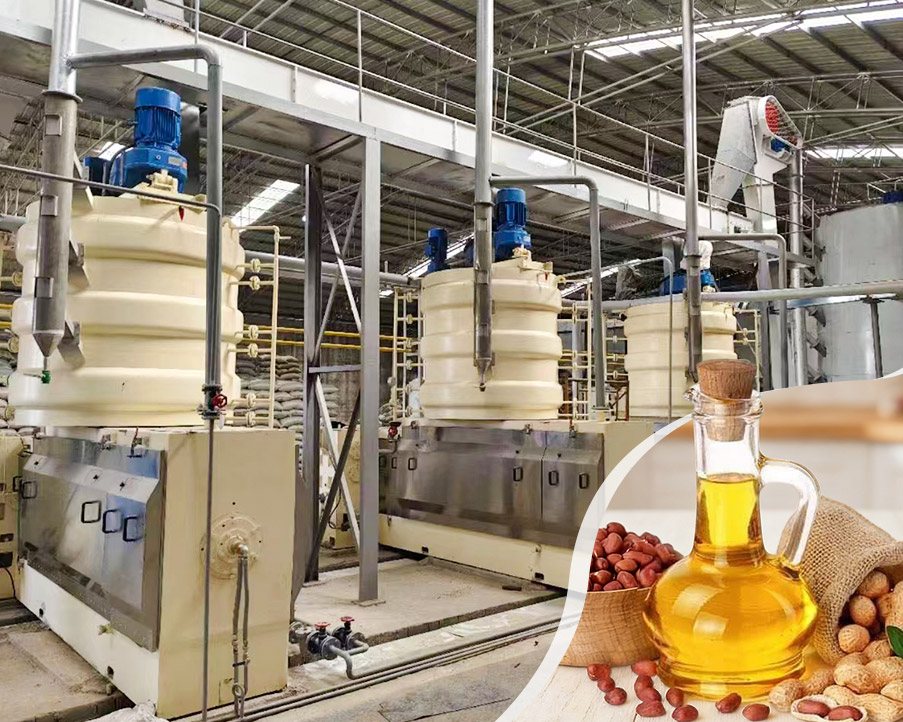
Overview of Peanut Oil Production in Modern Processing Plants
The Industrial Significance of Peanut Oil Manufacturing
Peanut oil keeps a strong place among edible oils. Its high nutritional value, pleasant flavor, and wide industrial uses support this position. Modern peanut oil making machine systems include automation and precision engineering. These features help maintain steady product quality. In large-scale operations, manufacturers such as Huatai Group run complete production lines. These lines combine mechanical pressing, solvent extraction, and refining steps. The 30-1200t/d peanut oil refining project shows how these systems can handle different output levels.
Automation and energy efficiency shape the current design of groundnut oil processing machine systems. Digital control systems adjust temperature, pressure, and flow rates during operation. This control supports higher yield and lower resource use. The intelligent monitoring system improves output and allows full supply-chain tracking.
Evolution of Groundnut Oil Processing Technology
The move from manual extraction to continuous automated lines marks an important step in the edible oil industry. Earlier methods used heavy manual labor and small mechanical presses. Output stayed low and results varied. Today’s groundnut oil making machine uses high-strength materials, frequency conversion drives, and PLC-based automation. These additions raise performance and cut variation.
Huatai Group has carried out such upgrades in projects around the world. One example is the Motta: 12T/D Pressing, 3T/D Refining Project, for Soybean, Peanut. The updated facility reaches higher efficiency and lower waste through precise engineering. Digital monitoring tracks moisture content and pressing pressure in real time, which helps keep the process stable.
Core Components of a Peanut Oil Making Machine
Seed Preparation and Cleaning Systems
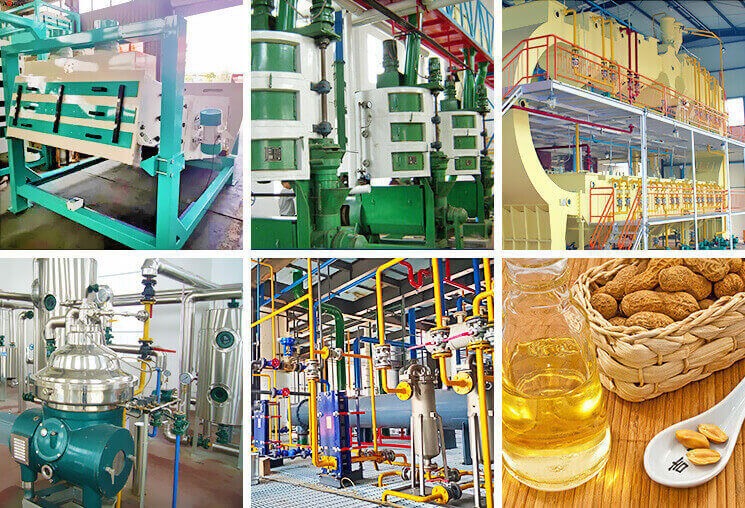
Seed preparation supports high-quality oil output. The cleaning line usually contains dehulling machines, grading systems, magnetic separators, and dust collectors. Removing impurities early reduces wear on later equipment and raises overall yield.
Huatai Group’s YYPT/Y Series Hydraulic flaking mill is widely used in peanut pretreatment before pressing. Product usage covers soybeans, sunflower seeds, camellia seeds, and peanuts. The machines have cast steel frames that give high rigidity under heavy loads.
Oil Extraction Mechanisms
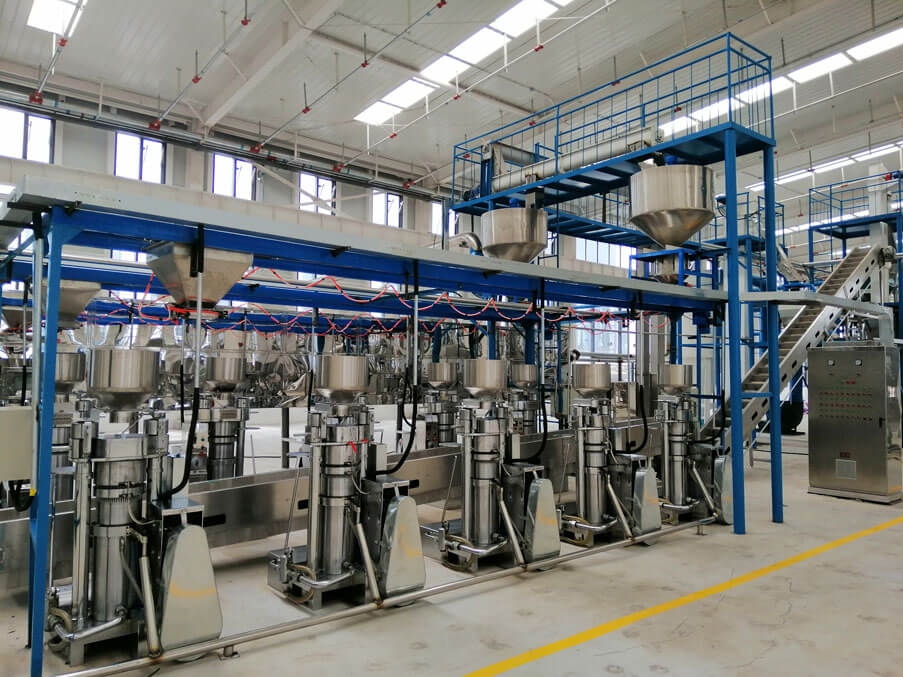
Mechanical pressing remains common for medium-scale peanut oil production lines. Screw press technology supports both hot and cold pressing, depending on product needs. Huatai Group’s patented screw press shows progress in this area. The pressing screw, pressing chamber, cake ring, and cake cone sleeve use wear-resistant cast steel. The main motor uses frequency conversion speed regulation. These features allow pressure settings to match seed moisture while keeping steady throughput.
Nitrided steel parts extend service life during long, high-load runs. Touch screen controls simplify operation and give repeatable results across batches.
Large-capacity plants use solvent extraction systems to reach maximum oil recovery. Closed-loop solvent recovery reduces losses and emissions while meeting environmental rules. Heat exchange networks inside desolventizing units recover thermal energy and lower operating costs.
Huatai Group’s international projects show this approach in practice. One case is the 250T/D flaxseed pre-pressing, extraction and refining project in Ethiopia. The same design principles apply to peanut processing lines.
Filtration and Refining Equipment
After crude extraction, multi-stage filtration removes solid particles before refining. Refining units carry out degumming, neutralization, bleaching, and deodorization. Automated control loops keep temperature profiles within set ranges.
Huatai Group’s refinery solutions cover 30-1200t/d peanut oil refining project capacities. These refineries use advanced automation to control chemical dosing and maintain consistent food-grade quality.
Design Considerations for Selecting Groundnut Oil Making Machines
Capacity and Throughput Requirements
Equipment selection starts with matching capacity targets to raw material supply. Modular plant designs allow step-by-step expansion without large building changes. This feature helps developing markets and phased investments.
Energy Efficiency and Operational Cost Optimization
Energy use affects profit in continuous operations. Energy-efficient motors and variable frequency drives reduce electricity demand during low-load periods. Heat recovery from process streams can preheat incoming seeds or water supplies.
Preventive maintenance programs use predictive analytics to cut downtime. Vibration or temperature sensors built into the machinery spot wear patterns early.
Material Construction and Durability Standards
All contact parts should be made from food-grade stainless steel to avoid contamination or corrosion during long exposure to moisture or solvents. ISO or CE certification supports reliability and helps buyers who need standardized equipment for export.
Automation and Process Control in Modern Groundnut Oil Plants
Integration of PLCs and SCADA Systems
Modern peanut oil making machines depend on programmable logic controllers and SCADA interfaces for central supervision. Real-time monitoring keeps temperature gradients steady during frying or pressing stages. Remote access is possible across multiple units in one facility.
Predictive Maintenance Using IoT Sensors
IoT sensors measure vibration amplitude, bearing temperatures, and hydraulic pressure changes. These readings detect problems before mechanical failure occurs. Data analytics platforms turn the readings into clear maintenance schedules.
Enhancing Product Quality Through Process Optimization
Controlling Key Variables During Extraction and Refining
Correct temperature levels during hot pressing help keep natural flavor compounds in peanuts and limit oxidation. Balanced screw rotation speeds raise yield while protecting fatty acids.
Quality Assurance Through Analytical Testing
Routine lab tests measure free fatty acid content, peroxide value, and color index. These checks confirm compliance with national edible oil standards. HACCP frameworks support food safety from seed intake to final packaging and strengthen brand trust.
Sustainability Practices in Peanut Oil Manufacturing Plants
Waste Utilization Strategies
Sustainability covers waste reuse as well as energy savings. Pressed peanut cake supplies protein-rich animal feed. It can also become defatted flour for human food industries. Process water recovery through filtration cuts discharge volumes and lowers utility costs over time.
Energy Recovery from Process Heat Streams
Thermal energy recovered from refining sections through heat exchangers can preheat incoming crude oil streams. This practice raises plant-wide thermal efficiency by up to 20 percent. Combined heat-and-power installations turn waste heat into electricity for seed drying or packaging automation.
Future Trends in Groundnut Oil Processing Equipment Development
Advancements in Continuous Processing Technologies
New continuous expellers combine preheating, pressing, and filtering inside compact modular units. These units suit decentralized setups near farming clusters. They cut logistics costs while keeping the quality standards set by major manufacturers such as Huatai Group.
Digital Transformation in Oil Production Lines
Artificial intelligence now helps adjust process variables in real time based on live sensor data. This approach improves decision accuracy beyond standard PID controls. Cloud platforms gather operational data from different sites. The data supports planning for raw material logistics and market demand inside enterprise resource planning systems.
Conclusion
Advanced groundnut oil processing machine technologies combine mechanical strength with digital intelligence. They deliver higher efficiency and better sustainability across global markets. Huatai Group has shown this capability through projects such as Gonder. The company continues to lead innovation in edible oil engineering worldwide.
For more information about customized peanut oil making machine solutions that match specific capacity needs, contact us today.
FAQ
Q: What factors determine the right capacity for a peanut oil making machine?
A: Capacity choice depends on raw material supply, target daily output from 10 to 300 tons, power stability, and growth plans.
Q: How does Huatai Group ensure durability in its groundnut oil processing machine?
A: Huatai Group uses wear-resistant cast steel parts treated by quenching or nitriding. These steps extend service life under continuous heavy-duty cycles.
Q: What makes modern groundnut oil making machine energy-efficient?
A: Variable frequency drive motors and closed-loop heat recovery systems cut overall energy use compared with older batch setups that lack regenerative thermal management.
Q: Can peanut cake residue from pressing be reused sustainably?
A: Yes. Defatted peanut cake works as livestock feed rich in protein. It can also serve as input for protein isolate production, which reduces waste at the source.
Q: Why choose Huatai Group equipment for large-scale peanut oil production?
A: Huatai Group supplies complete turnkey lines from seed preparation through solvent extraction to full refining.