
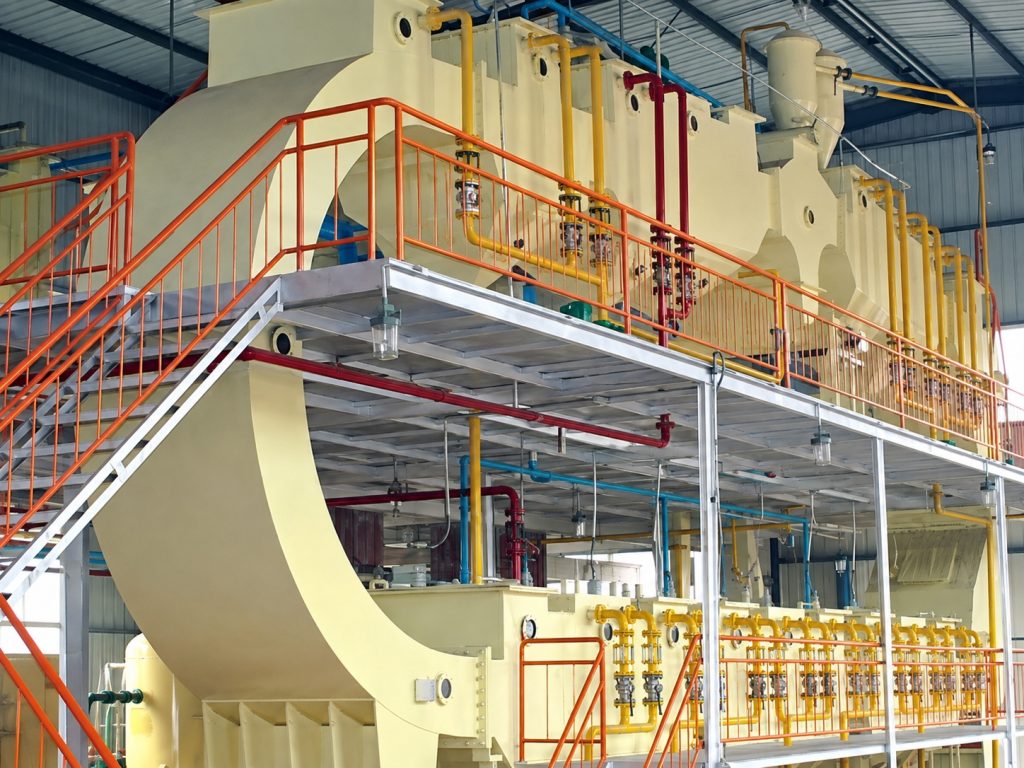
A reliable rice bran oil production machine is more than an oil press. It connects rapid stabilization, material preparation, extraction, refining, and dewaxing so delicate rice bran can be converted into stable, clear, market-ready oil. The process route should match the condition of the bran, the intended extraction method, the finished oil standard, and the operating rhythm of the plant.
Why Rice Bran Needs Fast Stabilization
Rice bran is an important by-product obtained from rice milling; however, the by-product is highly susceptible to deterioration immediately after its isolation from the grain. Lipases may lead to free fatty acid formation, making further processing of the material difficult. For this reason, stabilization is the first practical decision in a rice bran oil production process.
Stabilization uses controlled heat treatment or extrusion to reduce the activity that affects oil quality. It also changes the physical structure of the bran, helping later extraction work more evenly. A stable raw material gives the plant a better starting point for consistent crude oil handling.
How Stabilization Protects Oil Quality
The purpose of stabilization is not simply to heat the bran. Moisture, temperature, residence time, and material flow must be coordinated so the bran is treated evenly without creating unnecessary energy demand or blockages. This is where a properly designed rice bran stabilization equipment section supports the whole line.
The Role of Conditioning and Extrusion
Extrusion applies heating, shearing, rubbing, and pressure release to the material. In a rice bran oil production machine, this treatment can disrupt oil-bearing cells and expose more oil before solvent extraction. The resulting expanded material is easier to handle and can provide better contact with solvent in the extraction section.
How the Extraction Route Affects Oil Recovery
Rice bran has a structure that makes process coordination especially important. Preparation helps in getting rid of the unnecessary material, while conditioning and extrusion make the feed more favorable for extraction. The proper choice of the method depends on the required scale, the state of the bran, and on whether the plant uses mechanical pressing or solvent extraction or both methods.
When Solvent Extraction Is Practical
The rice bran oil extraction machine using the solvent extraction method is typically an integral part of a process rather than an individual piece of equipment. Prepared bran is fed into the extractor, and the entire process involves the separation of miscella, stripping of solvent from meal, vapor recovery, and feeding of crude oil to be refined. Control of temperatures, sealing, evaporation, and condensation becomes critical as they influence both recovery and efficiency.
In case of industrial-scale production, it is important that the extraction process communicates efficiently with the conveying equipment, desolventizing equipment, storage tanks, and refining plant. An inefficiency in one part of the process lowers the importance of others even when the machines work independently.
Why Material Preparation Matters
Poor preparation can lead to uneven solvent contact, unstable feeding, excessive fines, or difficult material discharge. By contrast, controlled moisture and a uniform expanded structure help the extractor operate with a more predictable feed. The aim is not to force every rice bran project into the same configuration, but to build a process that respects the material.
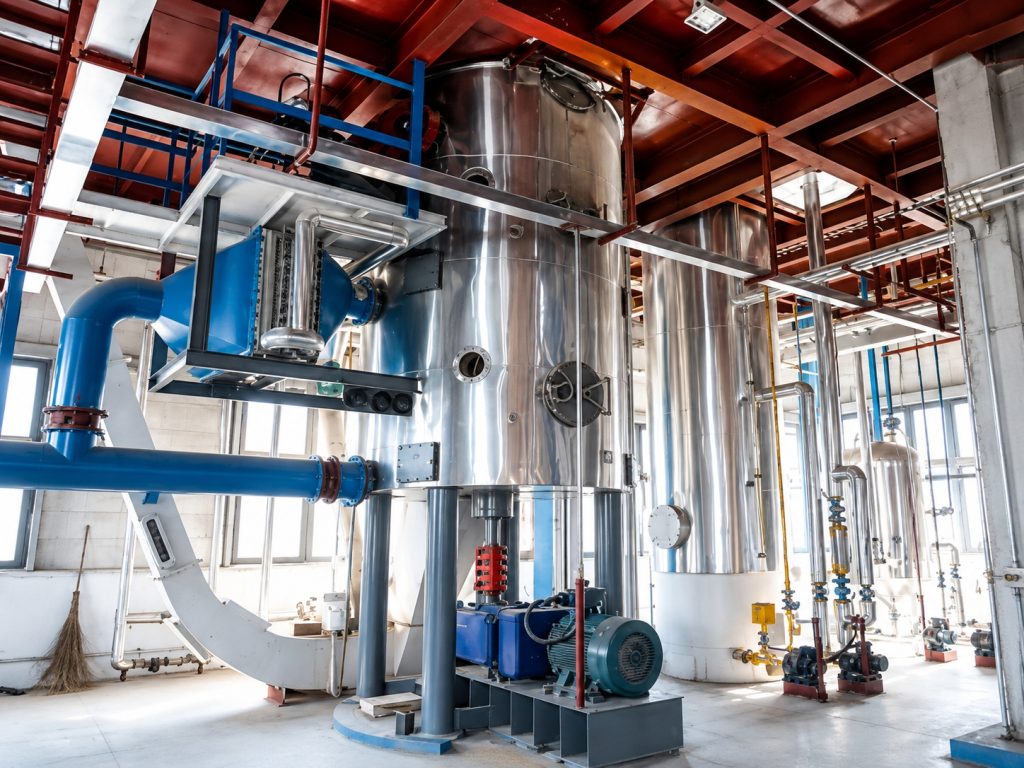
Why Refining and Dewaxing Must Be Planned Together
Crude rice bran oil still contains gums, free fatty acids, pigments, odor compounds, moisture, and waxes after extraction. Rice bran oil refining equipment must remove these components in a sequence that protects yield and prepares the oil for its final use. A typical route may include degumming, neutralization or physical deacidification, bleaching, deodorization, and dewaxing.
Degumming, Neutralization, and Bleaching
Degumming reduces phospholipids before the oil enters the main purification stages. Depending on the crude oil and the selected route, neutralization may use alkali to separate free fatty acids, while physical refining may rely on vacuum steam stripping later in the process. Drying and bleaching then reduce moisture, pigments, residual soap, trace metals, and oxidation products.
The bleaching section needs controlled contact and effective filtration. Too little contact leaves color bodies in the oil, while excessive adsorbent use can increase oil retention in spent earth. Stable mixing, temperature management, and filtration therefore influence both appearance and practical process economics.
Deodorization and Wax Crystallization
Deodorization removes volatile odor compounds and remaining free fatty acids under vacuum with steam stripping. The section must maintain even oil distribution, suitable residence time, efficient heat exchange, and reliable vacuum conditions. These details influence flavor neutrality and the storage behavior of the finished oil.
Dewaxing is especially important for rice bran oil because waxes can affect clarity when the oil is stored or used at lower temperatures. Cooling allows wax crystals to form, and filtration separates them from the oil. When the crystallization and filtration stages are matched to the product requirement, the finished oil can have a cleaner appearance and better low-temperature performance.
 rice bran oil production machine, rice bran oil production process, rice bran oil extraction machine, rice bran oil refining equipment, rice bran oil dewaxing, rice bran stabilization equipment
How to Choose a Rice Bran Oil Production Machine
Match the Line to Raw Material and Capacity
The right capacity is not simply the largest number available. It should reflect the supply of fresh rice bran, the expected operating hours, storage conditions, and the balance between extraction and refining. Huatai Group describes rice bran pretreatment and solvent extraction projects in the 30–1000 T/D range, while rice bran oil refining projects are described in the 30–500 T/D range. The final configuration still needs to be matched to the specific process route.
Consider an Integrated Process Line
A complete solution should show how bran moves from stabilization to extraction and how crude oil moves into refining and dewaxing. Conveyors, tanks, heat exchangers, separators, filters, vacuum systems, and controls all contribute to the final result. This integrated view helps prevent a strong extraction section from being limited by weak refining capacity or insufficient storage.
Huatai Group connects oilseed pretreatment, extraction, and refining into coordinated production-line solutions. Its rice bran oil process can be planned around stabilization, extrusion, solvent extraction, desolventizing, refining, and optional dewaxing. The practical value lies in fitting each section to the next so the plant can maintain a stable flow from raw material to finished oil.
Conclusion
The machine used to produce rice bran oil gains sustainability when the processes of stabilization, extraction, refining, and dewaxing are combined as a whole process. Rapid stabilization ensures that the raw material is protected, while extrusion ensures that the bran is made ready for extraction, and the refinery ensures that the right components are removed from the bran.
Huatai Group brings these decisions together through integrated oil processing solutions that focus on stable operation, finished-oil quality, and practical plant coordination.
Explore Huatai Group rice bran oil solutions for a clearer path from rice milling by-product to refined edible oil.
FAQ
Q: Why does rice bran need stabilization before oil extraction?
A: It is important to stabilize rice bran after milling since the natural enzymes present can lead to higher levels of free fatty acids. This process decreases the deterioration of the bran and ensures a consistent feedstock for processing. It also helps the refining section work with a more predictable crude oil condition.
Q: What equipment is used in a rice bran oil production line?
A: A complete line may include cleaning equipment, conditioners or extruders, conveyors, solvent extractors, desolventizing equipment, evaporation and condensation systems, refining vessels, bleaching and deodorization equipment, crystallizers, filters, storage tanks, and control systems. The exact combination depends on the raw material, capacity, extraction route, and finished-oil target.
Q: When is solvent extraction suitable for rice bran?
A: Solvent extraction is suitable when the plant needs a connected industrial process for recovering oil from properly prepared rice bran. Stabilization and extrusion help create a more accessible material structure, while the extractor, desolventizer, evaporation, and recovery sections work together to manage oil and solvent flows. The process should be designed around capacity and operating conditions.