

Bleaching earth filtration removes the adsorbent from the oil after bleaching, and in an edible oil refinery its job is to deliver clarified bleached oil to the next stage at the rate the line needs. That depends on the feed reaching the filter, the full operating cycle and what happens to the oil retained in the spent solids, not on a single favourable flow reading.
A useful question is how much acceptable filtrate the refinery receives over a complete period of operation. A high reading early in a cycle may be followed by slower flow or a long changeover. If that repeats, the downstream stage gets its feed in bursts despite a good instantaneous figure at the filter.
Put Bleaching Earth Filtration in the Refinery Flow
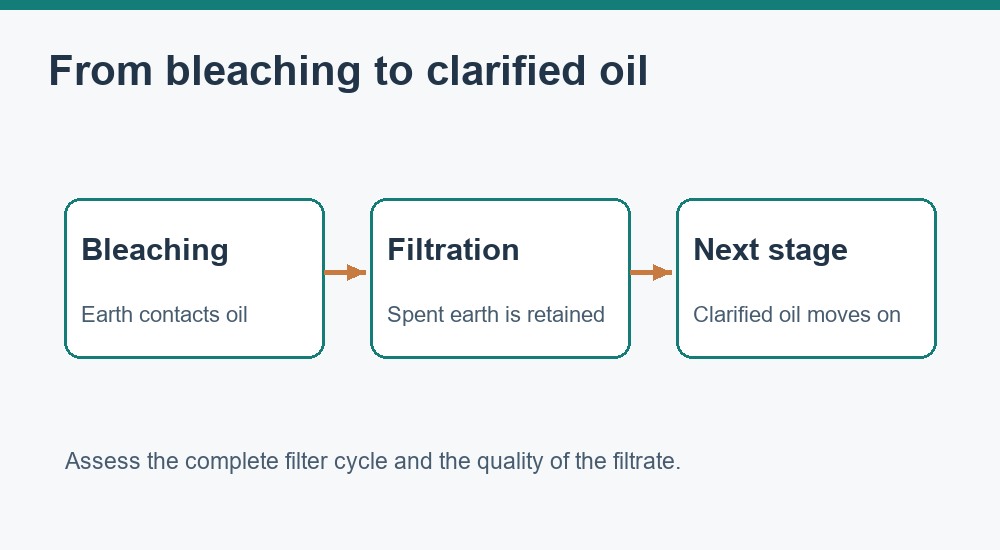
Extraction releases oil from the oil-bearing material; refining treats the resulting crude oil. Bleaching is one refining step, normally after the appropriate upstream preparation and before deodorization in a conventional edible oil train. Bleaching earth contacts the prepared oil to adsorb colour bodies and other constituents, and the filter separates that solid material from the oil. The sequence matters when a project is scoped, because a change in the bleaching section arrives later as a feed problem in deodorization.
Mark the filter feed and filtrate outlet on the flow diagram, and check where oil goes during startup, routine filter switching and any hold that calls for inspection. If early filtrate returns for further treatment, the return path and tank arrangement belong in the project layout. Those connections matter to the shift team long after the equipment is handed over.
Huatai Group supplies the bleaching section as part of a complete refining line rather than as a stand-alone filter. Its refining scope covers degumming, deacidification, bleaching and deodorization, with dewaxing added for oils that need it, and capacities run from 30 to 1,200 tonnes per day. The same supplier can therefore match a bleaching duty to the neutralization and deodorization stages on either side of it.
Compare Cycles Using the Feed That Will Reach the Filter
The feed to the filter contains oil and solids. Earth type and dose, upstream preparation and the condition of the oil all influence the solids burden. In typical refining figures, bleaching earth consumption runs about 6 to 15 kg per tonne of crude oil, and spent earth can retain a considerable share of oil; a well-designed bleaching stage keeps the oil content of the waste clay at or below roughly 23%. Agree how these feed details will be recorded before comparing two filter runs.
Ask for the amount of acceptable oil from start to finish and a record of any interruptions, and record filtrate clarity against the agreed method. A steady bulk flow has limited value if solids still carry over. A clear sample alone also leaves open the question of how much oil the system can deliver across a full shift.
Allow Room for Changeover and Spent Earth Handling
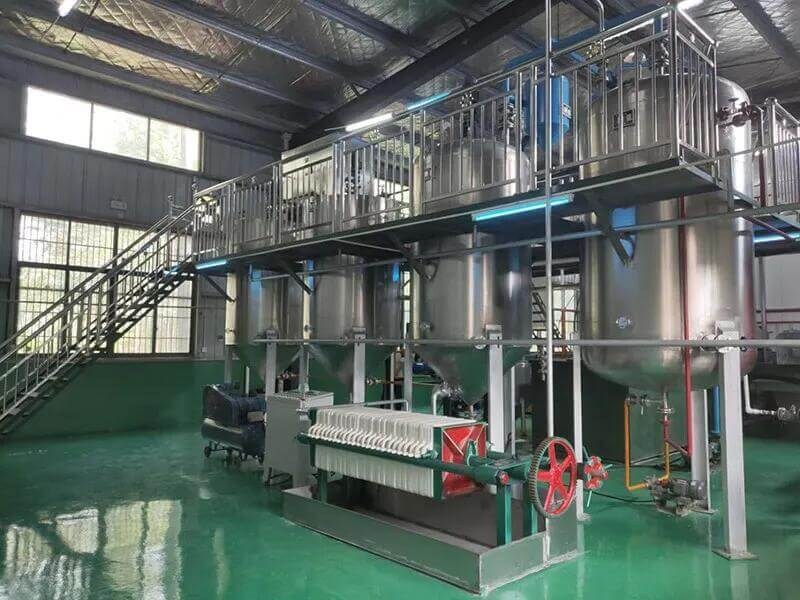
A filter cycle includes time for filtration and time for activities that do not send oil forward: ending the run, treating residual oil, removing spent earth and preparing for the next cycle. Compare the time allowances in the design with what operators can demonstrate during acceptance. Spent earth retains oil, so the refining team needs an approved handling arrangement suited to its properties and to local requirements, with space, access and material movement shown on the project drawing. Resolving storage and transfer needs while the equipment area is still being planned is far easier than retrofitting them afterwards.
Choose a Bleaching Tower and Filter That Work Together
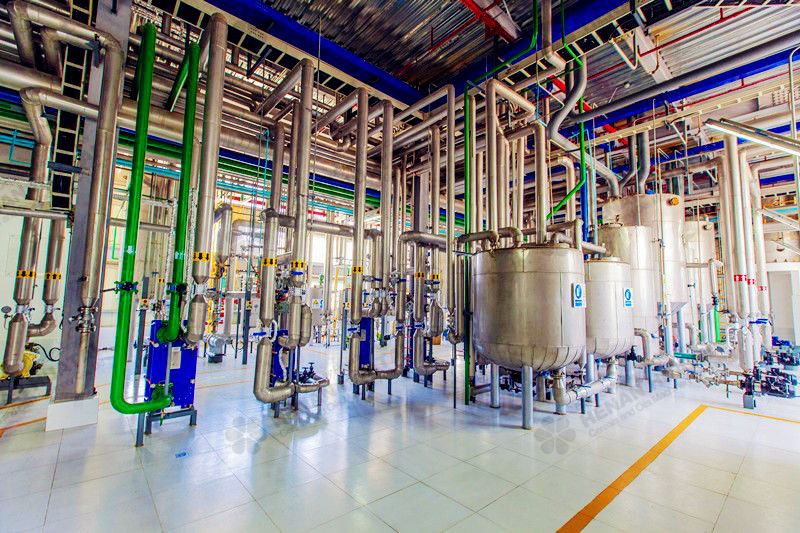
Bleaching performance depends on contact time and vacuum as much as on the filter. Huatai Group builds bleaching towers across a range of sizes, from units around ø1000 × 3000 mm up to ø2600 × 5000 mm, so vessel volume can be matched to the throughput and the residence time the oil needs. Because Huatai Group manufactures the whole line, the tower, the filter and the deodorizer are sized against one capacity figure instead of being bought separately and reconciled later.
That single scope also shortens the handover. Huatai Group has been building grain and oil machinery since 1988, holds ISO 9001 quality management certification and has delivered turnkey oil projects in more than 70 countries, supported by 22 overseas offices. For a refinery, the practical benefit is that one engineering team owns the interface where a bleaching changeover becomes a deodorizer feed interruption.
Ask any supplier how a filter changeover is meant to affect the next stage and who holds the buffer volume while it happens. With Huatai Group’s crude oil refinery section, that question can be settled in the same review as the upstream preparation and the downstream oil treatment.
Define a Test the Downstream Team Can Use
Start acceptance by agreeing what the refinery has to deliver at the interface: stable supply, acceptable solids carryover and clear records of any recirculated or held volume. Use the same sampling points and measurement method across runs. If upstream feed conditions change materially during the trial, log that change alongside the results.
Include the operator who receives the filtrate in the review. A changeover that looks simple on the bleaching side can create a meaningful feed interruption downstream. A defined response, covering where the usual sample station sits and where oil held for a check is sent, lets the team decide what happened to affected oil without stopping the rest of the line.
Conclusion
Judge bleaching earth filtration on acceptable oil delivered across a complete operating cycle, with the solids burden, changeover time and spent earth handling compared against what the refinery actually needs. Huatai Group’s refining scope covers bleaching as one stage of a turnkey edible oil line, so the filter, the bleaching tower and the deodorizer are sized against the same capacity. Share your planned oils, feed conditions and target capacity, and the project team will map the bleaching and filtration stage for your line. See the edible oil refining line or contact Huatai Group to discuss the stage.
FAQ
Q: Does bleaching earth filtration extract oil from seeds?
A: No. It takes place in refining, after oil has already been extracted from the seed or fruit. The filter removes the solid bleaching earth that was contacted with prepared oil. It is separate from extracting oil and from removing coarse particles from freshly pressed oil upstream.
Q: Why can filtration take longer on one oil than another?
A: Feed condition, solids concentration and the way the filter cake builds vary between oils and between batches. Compare what arrived at the filter and how the complete cycle ran before attributing the difference to the equipment. Use a feed range representative of the grades the plant will actually process.
Q: Is one clear filtrate sample enough to approve the filter?
A: A clear result is useful at its sampling point. Collect results at agreed times across the cycle and track the amount of acceptable oil delivered. Combine the sample record with cycle time and changeover observations to understand how consistently the next process receives its feed.
Q: What should a refinery record about its spent bleaching earth?
A: Record the amount removed, the sampling basis and the handling instructions that apply at the plant. If the team wants to estimate retained oil, agree the measurement method first. Keep the record alongside the filtrate and feed data so the figures can be interpreted over a comparable run.
Q: What should a plant share with an engineering supplier for line sizing?
A: Provide the planned oils, feed conditions, capacity range, target refined grades and the existing layout. Flag any expectation for continuous feed to the downstream stage. The supplier can then compare the bleaching duty and changeover allowances with the other units in the refinery.