
Set the press or extractor feed condition before choosing machines for the edible oil production line.
Start the Edible Oil Production Line With a Raw-Material Record
Sample deliveries by lot and record:
– seed or oil-bearing material and variety where relevant;
– supplier, origin, harvest period, and receipt date;
– hourly and daily quantity;
– incoming laboratory results;
– hull content and the required meal specification;
– physical condition and bulk density;
– storage record;
– test method and sample location.
Show the cases that equipment must handle, not just an average.
Select Only the Steps the Seed Needs
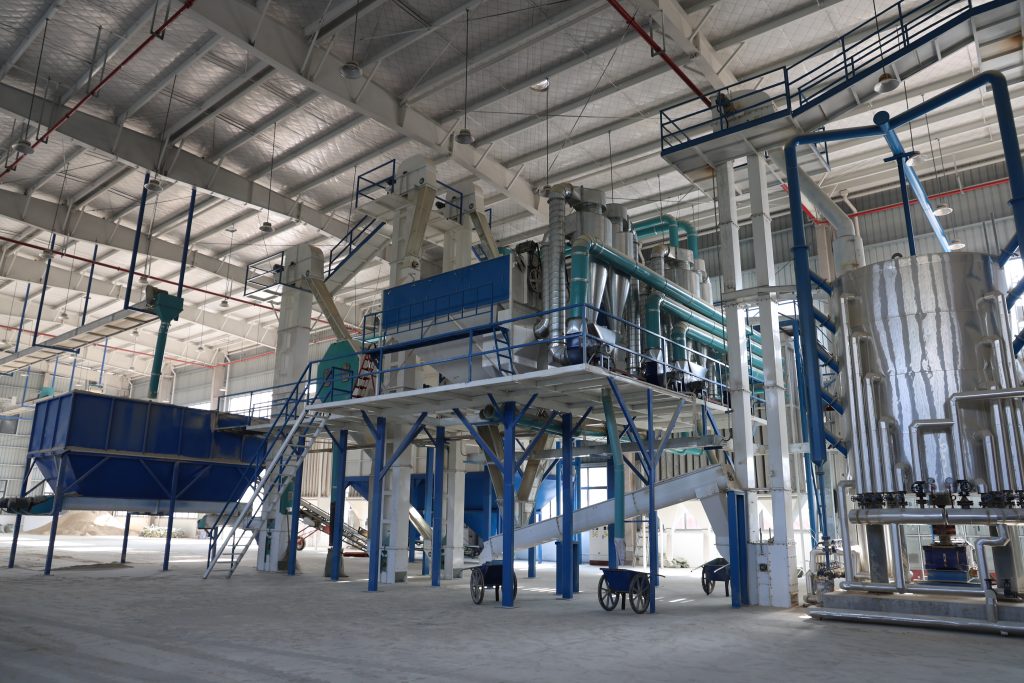
Route options include:
– screening and aspiration;
– destoning and magnetic separation before size-reduction equipment;
– drying or moisture adjustment;
– dehulling and hull separation where product economics support it;
– cracking to create a controlled particle range;
– conditioning to set moisture and temperature;
– flaking to create a suitable extraction structure;
– cooking before pressing where the route calls for it;
– extrusion for materials and process arrangements that need it;
– time-sensitive stabilization.
Use only the operations supported by feed tests and product requirements. See the Huatai edible oil production line introduction for the wider process sequence.
Cleaning and Dehulling
Set a design impurity range, reject route, dust duty, and cleanout method.
For dehulling, balance kernel loss, meal target, downstream load, and bed condition. Some routes keep or return part of the hull stream.
Form the Extraction Feed
Cracking, conditioning, and flaking work as one preparation sequence.
Crushing reduces the seed to a controlled size before the flaking rolls. Conditioning then changes moisture and temperature so the material responds consistently under pressure. The rolls create flakes that shorten the path for oil release or solvent contact. Feed distribution, roll condition, seed temperature, and moisture all influence the result, so flake thickness should never be reviewed as an isolated number.
For mechanical pressing, unstable preparation can appear as changing torque, throughput, cake condition, or clarification load. In a solvent plant, the same variation may appear as fines, poor drainage, compaction, or channeling in the extractor bed. A shared operating record helps the pretreatment team distinguish a raw-material change from a machine-setting problem.
The operating sheet should capture:
– feed rate to each machine;
– seed temperature and moisture before conditioning;
– conditioned temperature and moisture;
– residence time or equipment level where applicable;
– cracked-particle distribution;
– flake thickness range and visual consistency;
– fines, unflaked pieces, and roll condition;
– motor load, vibration, blockage, and bypass events;
– product temperature at the press or extractor inlet.
Investigate preparation first when cake, drainage, or bed condition shifts.
Record the Handoff
Huatai’s complete processing plant presents the main connected sections. Place these results on one handoff sheet:
– press or extractor feed rate;
– cake or meal residual oil and test basis;
– cake thickness or extractor-bed observation;
– crude-oil test set;
– crude phospholipids or the agreed related test;
– crude quality observations;
– meal moisture and required product result;
– unplanned material movements;
– utility totals.
Link every sample to its seed lot, production period, and crude tank.
Controls and Access

Review the full material path, dust network, sampling, drainage, lifting, cleaning, and calibration provisions.
Raw-material storage also belongs in the control plan. Moisture migration, heating, pests, breakage, and extended holding time can alter both oil and meal quality before processing begins. Intake samples should retain lot identity through storage and production. Materials that deteriorate rapidly after milling require a defined maximum holding time and a route that prevents an avoidable delay before stabilization or extraction.
The Huatai Group covers turnkey process sections and project services. Confirm the scope boundary for equipment, civil work, utilities, installation, training, and laboratory work.
Commissioning Checklist
Before the performance run, confirm:
– the test lot represents the agreed design feed;
– measurement equipment and methods are ready;
– non-routine material is counted;
– sampling times match the material travel time through the line;
– the press or extractor has reached a stable condition;
– the refinery knows which crude tank represents the run;
– utilities will be recorded over the same time boundary;
– stops and excluded periods have an agreed rule;
– acceptance values and calculation methods are signed off;
– open items have an owner and closure date.
Operator Shift Log
Use a fixed log so one shift can compare its material condition with the next. Suggested entries are:
– date, shift, operator, and production order;
– seed lot and source silo;
– planned route and active equipment;
– start time, stop time, and reason for each stop;
– intake weight and transfer-bin movement;
– screen change, screen damage, and reject quantity;
– magnet inspection and metal finding;
– destoner observation and heavy reject quantity;
– aspiration setting and dust-system differential pressure;
– hull stream weight and kernel-loss check;
– crusher gap or other size-control setting;
– conditioner steam pressure and condensate observation;
– inlet and outlet moisture;
– inlet and outlet temperature;
– flaker roll gap, motor load, and surface condition;
– flake measurements at the agreed interval;
– fines and unflaked-material observation;
– cooker or extruder setting when used;
– press-feed or extractor-feed temperature;
– press torque, extractor-bed observation, or other downstream response;
– crude-oil tank and sample number;
– cake or meal sample number;
– cleaning completed and material recovered;
– maintenance request and temporary operating restriction;
– supervisor review and unresolved item.
Keep units beside every numerical field. If a value is estimated, mark it as an estimate. If the instrument is unavailable, record that fact instead of copying the previous reading.
Documents for the Design Review
The review package should make interfaces visible. Include:
– process flow diagram with every normal and bypass stream;
– mass balance for the agreed feed and capacity cases;
– equipment list with design duty and installed power;
– bin list with usable volume and residence time;
– conveyor schedule showing material, rate, and route;
– aspiration and dust-collection diagram;
– utility list with pressure, temperature, quality, and peak demand;
– sampling schedule and laboratory test list;
– control narrative, alarms, trips, and permissives;
– hazardous-area and fire-protection basis where applicable;
– reject, spill, washdown, wastewater, and waste destinations;
– access plan for screens, magnets, rolls, drives, and bearings;
– lifting plan for parts removed during routine maintenance;
– spare-parts list and lubrication schedule;
– commissioning procedure and acceptance calculation sheet;
– operator training topics and responsibility matrix.
Check that the same stream names and capacity basis appear across the flow diagram, balance, equipment list, and controls. Resolve mismatches before procurement because a late interface change can affect several machines and the building layout.
Change Review After Startup
Open a change record when the plant receives a new variety, a materially different impurity or moisture range, or a revised meal specification. Attach the new feed analysis and compare it with the approved envelope. Then review:
– storage and drying needs;
– cleaning and reject load;
– dehulling performance and kernel loss;
– crusher and flaker operating range;
– heat and moisture duty;
– press or extractor response;
– crude-oil handoff results;
– cake or meal result;
– utility and waste load;
– food-safety, emissions, and permit implications.
Authorize the trial conditions, quantity, sampling, segregation, and release decision in advance. After the trial, retain the results with the route settings and any new operating limit.
Conclusion
Huatai Group can design an edible oil production line from receiving and preparation through extraction, refining, and commissioning around an agreed feed envelope and handoff record.
FAQ
Q: Is one preparation route suitable for every oilseed?
A: No. Start with the received material; then select and test the route. Seed structure, moisture, impurities, hull content, storage history, pressing or extraction method, and meal target may change the necessary sequence. Record the approved feed range beside the route.
Q: What should operators record at the flaking mill?
A: Record the thickness range, fines, unflaked pieces, roll condition, feed distribution, moisture, and temperature. Link readings to the seed lot and production time. Motor load, vibration, bypass events, and maintenance restrictions help explain a change that a thickness result alone cannot.
Q: How does preparation reach the refinery?
A: Through the crude-oil handoff. Compare linked tank samples over time; do not infer refinery duty from the preparation settings alone. Include crude flow, moisture, insoluble material, acidity, phospholipids, and tank inventory. Reconcile the same production period with cake or meal results.
Q: What belongs in the first design package?
A: Include feed samples and tests, capacity cases, storage history, products, utilities, site constraints, schedule, and expansion case. Add a process flow, mass balance, sampling plan, laboratory methods, dust routes, maintenance access, control narrative, commissioning procedure, responsibility matrix, and site approvals.