
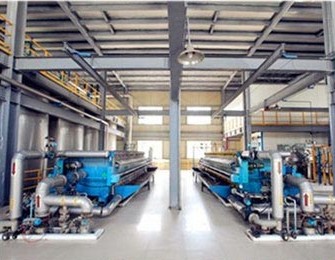
Identify if the problem is caused by slow filtration through the filters or if oil is still waiting for wax to crystallize in the cooling stages or if the filters are fully loaded with cake discharge and cleaning up. Rearrange tanks, cooling and filtration to run oil through treatment stages at required speed without hurrying through the treatment stages.
This is not to say that the appearance of the oil at the outlet of the plant is irrelevant. The wax may not be visible in a warm bottle but appear as haze in a cold bottle. The winterization process must be considered in terms of its outcome after the oil has left the plant.
Where Sunflower Oil Refining Loses Continuous Flow
Instead of following the arrows on a process plan, follow the oil. After pressing or solvent extraction the crude oil must be refined for gums, acidity, color and smell. This must then be followed by the respective end treatment for the respective product. These connections all seem straightforward on paper, but the time each of your vessels will be in use is far from it.
Consider what happens at a transfer point. If crystallized oil is waiting beside a busy filter, the separation section deserves attention; if the filter is clean but the oil is still cooling, the delay sits farther upstream. Following the waiting material gives the investigation a useful starting point.
The capacity basis matters here. A sunflower oil production line handles seed before it handles crude oil, and each flow has its own tonnage. Use the oil entering winterization when checking that section, rather than the weight of seed entering the factory.
Match Crystallization Time to Oil Flow
An empty tank has capacity to receive more product than a tank holding crystallized oil which will also need to be emptied and cleaned prior to refilling. Take account of filling and discharge when calculating true daily capacity of a vessel.
Put Tank Occupancy on the Schedule
Assign start and end times to filling and other tank operations, as well as to filter running and filter cleaning. Then, consider the time of the next oil transfer. If at that time all suitable vessels are filled to their capacity, then the list of installed tank volumes has exceededin its accounting for space to receive that transfer of oil.
A tank containing oil for crystal growth cannot be an empty receiving tank at the same time. The next load needs to go somewhere, or it needs to be scheduled differently. In many cases this will require a receiver and a holding tank to be described by separate duties depending on the process selected.
When solving an overlap protect the treatment phase. Moving oil to the first part of the tank will release it from the tank but will also change the oil that is processed by the filter. This means that a sunflower oil refinery plant needs sufficient output and oil that has gone through the required preparation for separation.
Coordinate Cooling, Mixing, and Filtration
The dewaxing of sunflower oil is controlled by managing the oil through the various thermal states. The oil is dissolved in preheating, and then the oil is cooled in a controlled manner using heat exchangers before it solidifies. The subsequent cooling and holding stages are then commenced from a consistent starting point.
As the wax cools in the crystallizer, it comes out of solution. Sluggish treatment agitation is distributed throughout the treatment to prevent breakage of the developing crystals. The held oil is then allowed to continue to grow the crystals before being sent to filtration.
Huatai Group’s dewaxing and winterization systems combine these vessels with refrigeration, brine services, filtration, and programmable controls. An anchor mixer, a cooling circuit, and a filter each perform different work. Their operating sequence has to give the next item suitable material to handle.
Check the Filter Cycle as Well as Its Size
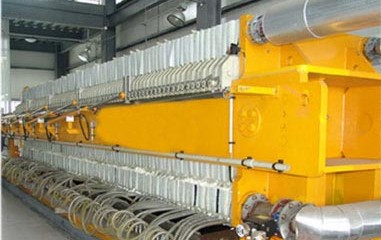
A plate-and-frame press holds wax in the solids while oil passes through. After use, the cake built up in the filter has to be removed and the filter cleaned up for re-use. When selecting an oil filtration system one has to allow for this operating window.
The duplex filters allow for alternating of filtration and cleaning of the oil. The key timing factor is to ensure that the oil is prepared and available for processing by the next available filter. The addition of another press will only be of benefit if the balance of the section is able to supply it.
A single temperature is not enough to establish a cooling program. What oil was this for? What was the wax content? What was the intent of the finish oil? All of these conditions need to be set for the “test” oil as well when establishing a program for the actual feed oil.
Connect Dewaxing to the Complete Refinery
A winterization plant for sunflower oil needs space for the various vessels and filters as well as for the connecting transport lines between them. The space required for the receiving and holding as well as for the cooling must be included in the planning. Storage spaces are also required and should be assigned a fixed space within the plant.
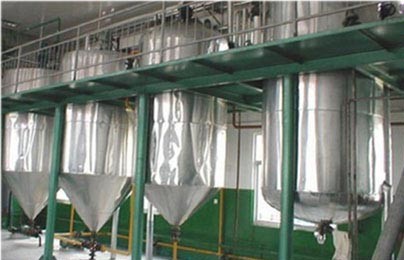
The oil refining equipment arrangement must accommodate the crude oil and the finished grade. Dewaxing belongs in this discussion while the route, utilities, and layout are still being decided. A finishing section added afterward may have fewer practical options for receiving oil or connecting its services.
Distinguish between product quality and output when evaluating proposed changes to an existing line. Will it produce the required quantity of oil and, after treatment, will the oil look as expected in storage under the proposed conditions? A shorter cycle must answer both questions before it becomes the ‘normal’ cycle.
How Huatai Group Integrates the Production Line
Huatai Group provides engineering design, equipment manufacturing, installation, commissioning, and operator training. Its turnkey production solutions connect seed preparation and oil recovery with the required refining stages. That scope brings dewaxing into the project before the equipment is installed.
For sunflower processing, raw-material characteristics, throughput, product grade, and site conditions establish the design basis. Crystallization and filtration can then be matched to the surrounding line. The practical value lies in resolving those connections across the plant.
During commissioning, walk through the transfers with the people who will operate the line. They need to know where the next charge goes while a crystallizer is holding oil or a filter is being cleaned. Installation gives the equipment its place in the factory; commissioning establishes how that equipment will be used together.
Conclusion
When dealing with dewaxing bottlenecks in sunflower oil refining, first identify the constraint and balance the necessary treatment steps with the corresponding equipment in cycles around it. Cooling, crystallization, filtering and cleaning all need their time and are integrated into the production-line as a whole when designed, installed and put into service by Huatai Group.
Learn more about the engineering expertise of Huatai Group for a complete sunflower oil plant.
FAQ
Q: Why can sunflower oil become cloudy after refining?
A: Natural wax can remain dissolved in warm oil and become visible as the oil cools. Degumming, bleaching, and deodorization have other duties and don’t automatically provide the wax separation needed for cooler storage. Winterization allows wax to crystallize, after which filtration removes the solids for the intended finished-oil appearance.
Q: Can a larger filter solve every dewaxing bottleneck?
A: Check whether oil ready for separation is actually waiting at the filter. If the oil is still cooling or developing crystals, extra filter area leaves that earlier delay unresolved. When prepared oil is waiting instead, examine filtration capacity and the cleaning cycle alongside the tank schedule before deciding what equipment to change.
Q: Does every refinery need the same crystallization settings?
A: The settings need to suit the oil, wax content, equipment arrangement, and required storage appearance. A temperature without its associated cooling and holding programme is incomplete information. Establish the sequence for the intended duty, then confirm that tanks, cooling services, and filters can follow it at the planned production rate.
Q: How should dewaxing capacity be matched to refinery output?
A: Work with the oil flow entering winterization and the complete processing cycle. Include tank filling, cooling, holding, discharge, filtration, and cleaning on one schedule. This shows how much treated oil can leave and whether receiving space or a filter will be available when the next transfer is due.