
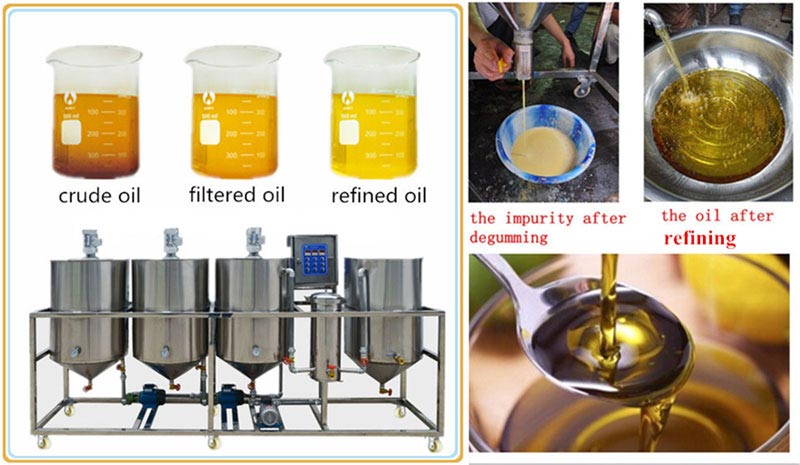
Edible Oil Degumming Process: The Essential Step in Oil Refining Plant
Edible Oil Degumming Process
Are you looking to maximize your oil refining efficiency and improve the quality of your final product? In an industrial oil refining plant, degumming is the critical first step.
Crude oil obtained from screw pressing or solvent extraction contains impurities like phospholipids, proteins, and sugars. These elements react with triglycerides to form colloids, commonly known as gum impurities. If left untreated, these gums compromise oil stability, increase oil loss during downstream refining, and darken the final oil color.
As a leading edible oil machinery manufacturer, Huatai Oil Machinery designs state-of-the-art oil refining plant degumming systems tailored to boost your factory’s yield and profitability.
Why is the Degumming Process Crucial for Edible Oil Refining?
Skipping or poorly executing the degumming process triggers a chain reaction of inefficiencies in your refinery line:
-
Increases Refine Loss: Non-degummed oil easily forms emulsified oil during the chemical deacidification (alkali refining) stage, drastically increasing neutral oil loss and chemical consumption.
-
Reduces Bleaching Efficiency: Residual gums coat the active sites of bleaching earth (adsorbent), driving up your production costs and lowering color-removal effectiveness.
-
Blocks Equipment: Gums char and carbonize under the high temperatures of the deodorization tower, causing severe equipment fouling and downtime.
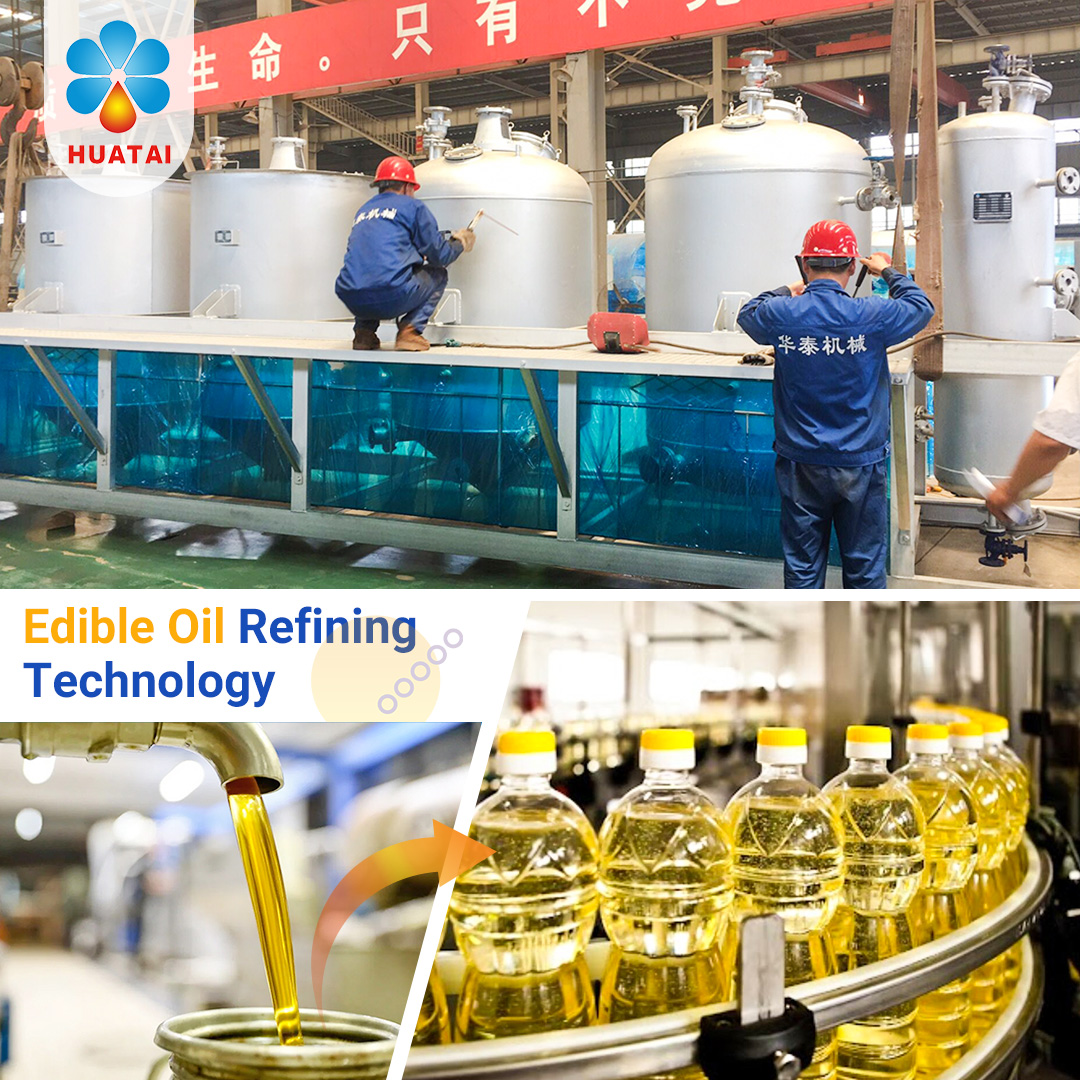
Technical Principle: How Hydrated Degumming Works
While there are several methods (including acid refining, adsorption, and electropolymerization), hydrated degumming is the most widely adopted and cost-effective method in commercial edible oil production.
The Working Principle
Phospholipids and other gum impurities are naturally hydrophilic (water-attracting). The hydrated degumming process utilizes this characteristic through precise engineering:
-
Mixing & Hydration: Hot water or an electrolyte aqueous solution (such as food-grade phosphoric acid or salt) is precisely metered and aggressively blended into the heated crude oil using high-shear mixers.
-
Condensation & Aggregation: Over a specific reaction period, the gums absorb water, swell, and agglomerate into heavy colloidal particles.
-
Separation: Leveraging density differences, the heavy condensed gums settle out or are accelerated away via high-speed centrifugal disc separators.
Value-Added Tip: The extracted gums are rich in phospholipids and can be processed into valuable commercial lecithin for food additives, animal feed, or technical applications, creating an extra revenue stream for your plant.
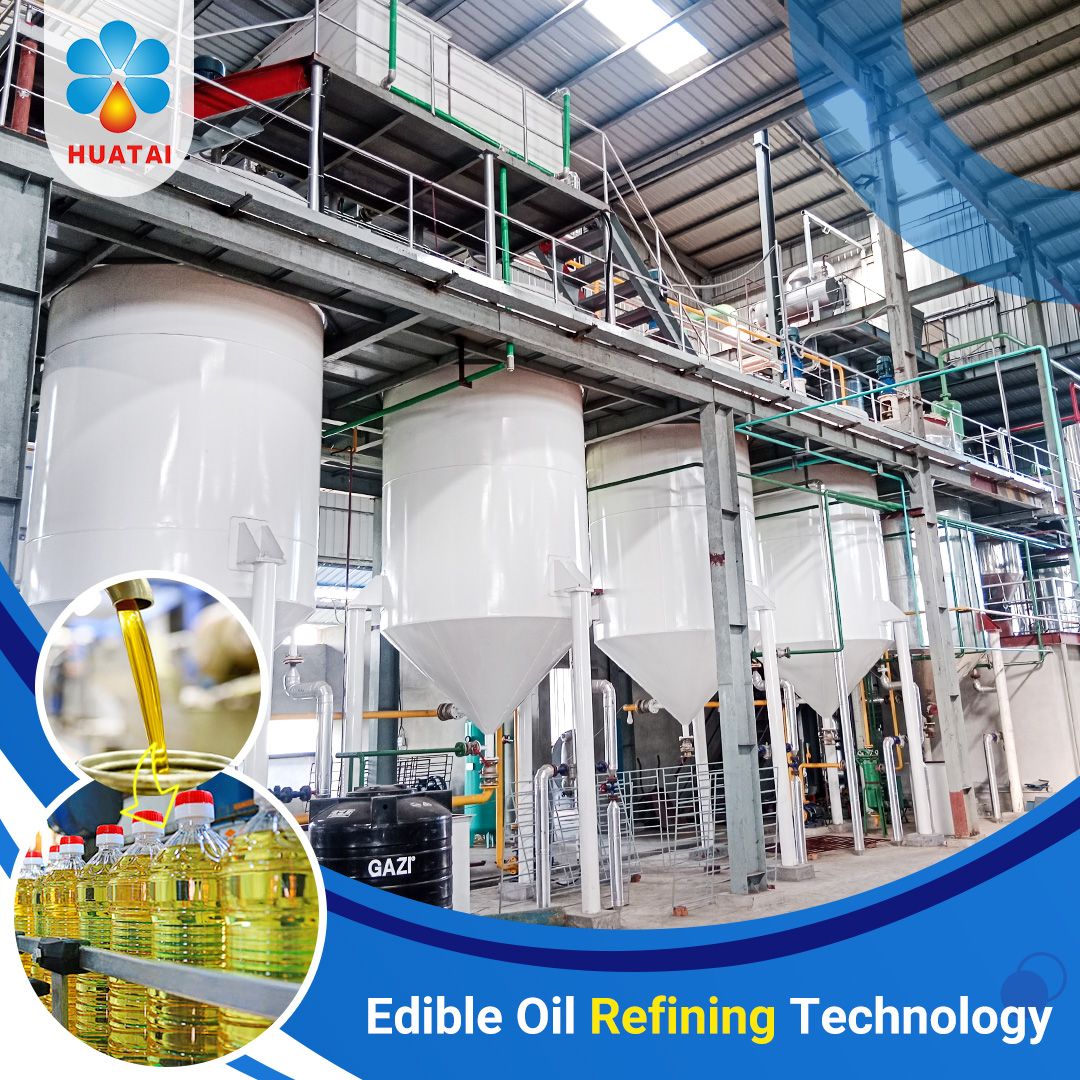
Technical Parameters & Temperature Configurations
The efficiency of a hydrated degumming machine depends highly on precise temperature and water ratios. Our systems support three optimized operation modes based on your oil type:
| Hydration Type | Operating Temperature | Water / Solution Ratio (W) | Best Applied For |
| Low-Temperature | $20^\circ\text{C} – 30^\circ\text{C}$ | $W = (0.5 – 1) \times G$ | Special small-scale artisanal oils |
| Medium-Temperature | $60^\circ\text{C} – 65^\circ\text{C}$ | $W = (2 – 3) \times G$ | Standard bulk oils (Soybean, Sunflower) |
| High-Temperature | $85^\circ\text{C} – 95^\circ\text{C}$ | $W = (3 – 3.5) \times G$ | High-gum crude oils / Continuous refining |
(Note: $G$ represents the total weight of the gum impurities inside the crude oil.)
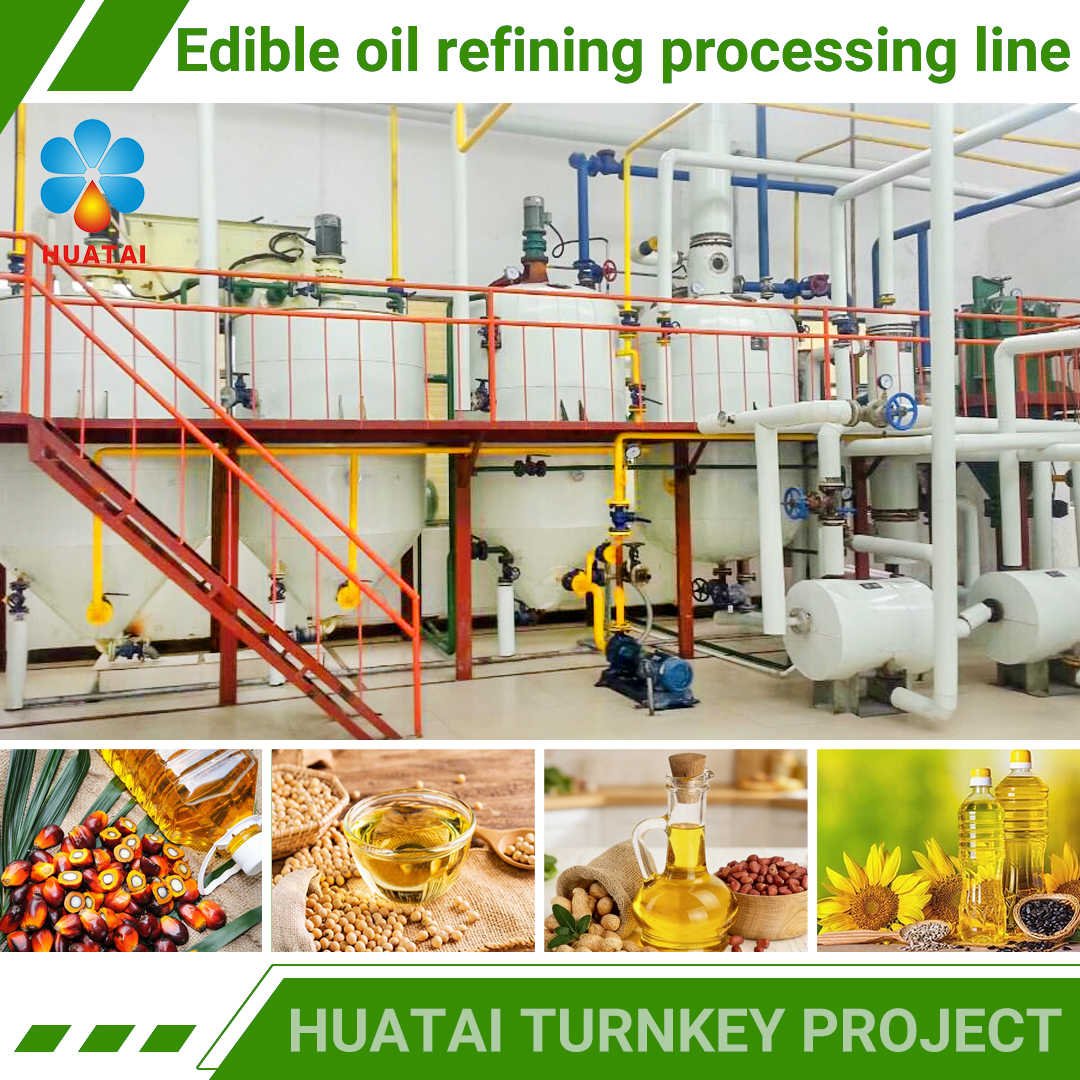
Tailored Refinery Solutions for Every Production Scale
Huatai’s degumming systems can be seamlessly integrated with deacidification, decolorization (bleaching), and deodorization machines to build a highly efficient oil purification production line. We classify our setups into three types depending on your daily production target:
-
Batch / Intermittent Type ($1 – 10 \text{ TPD}$): Best for small-scale mills or specialty oils. Low initial investment, flexible operation, and small footprint.
-
Semi-Continuous Type ($20 – 50 \text{ TPD}$): Ideal for medium-sized growing factories. Offers a balanced blend of automation and cost-efficiency.
-
Fully Continuous Type ($> 50 \text{ TPD}$): Engineered for large-scale industrial oil plants. Features fully automated PLC/DCS control, minimal labor costs, and maximum thermal energy recovery.
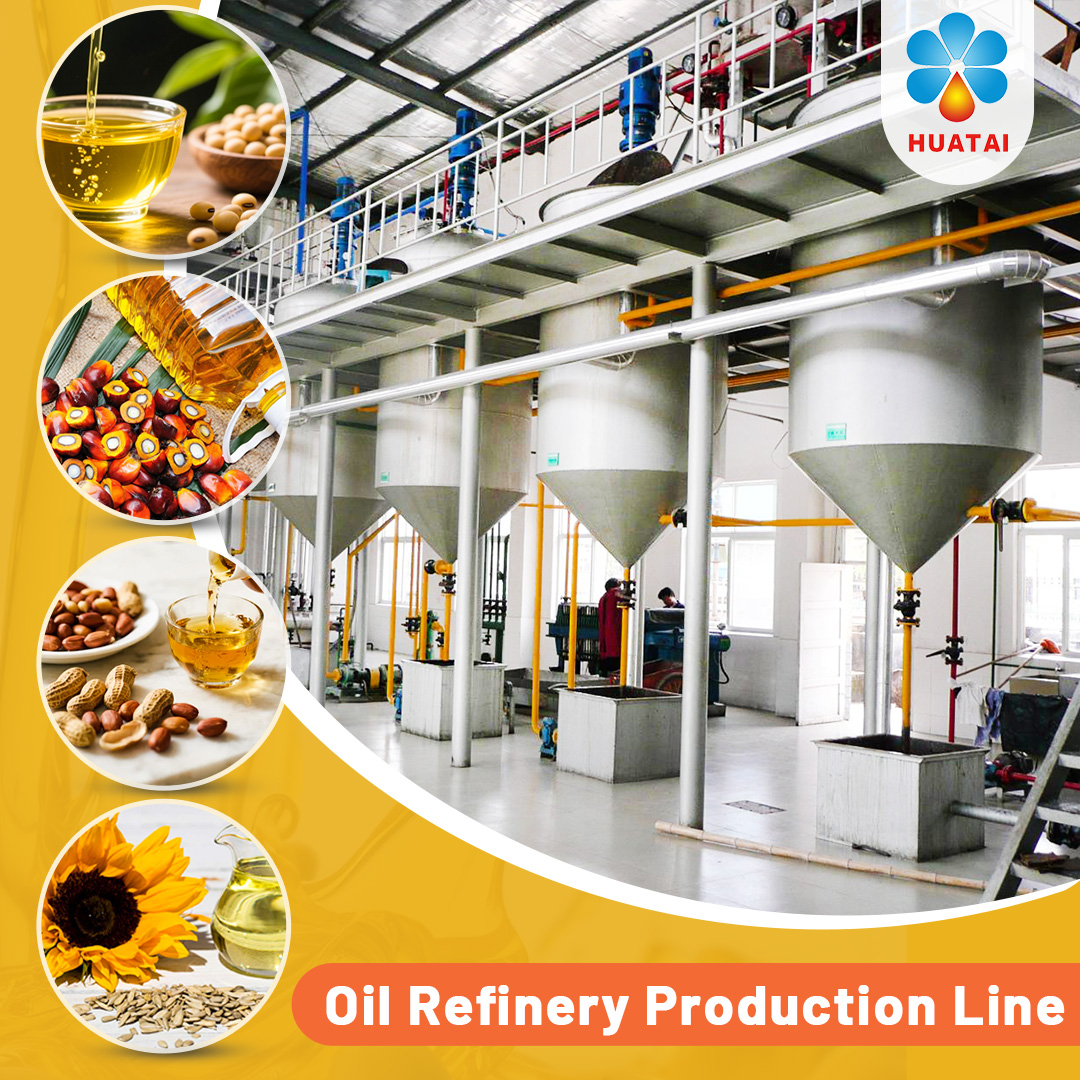
Why Choose Huatai’s Oil Refining Plant Degumming Equipment?
With over 36 years of expertise in grain and oil machinery manufacturing, Henan Huatai Cereals and Oils Machinery Co., Ltd. delivers engineering excellence that guarantees market success.
-
High-Shear Intimate Mixing: Advanced disc mixers ensure chemical solutions disperse into micro-droplets, achieving comprehensive gum aggregation with zero blind spots.
-
Advanced Centrifugal Separation: High-speed disc stack centrifuges provide maximum separation force, lowering neutral oil content in soapstock/gums to an absolute minimum.
-
Premium Materials & Build Quality: All corrosive-contact zones feature premium SUS316L stainless steel, precisely welded and passivated to ensure decades of failure-free operation under high vacuum and heat.
-
Global EPC Service: From 3D plant layout design and custom machinery manufacturing to on-site installation, commissioning, and staff training, Huatai provides a true turn-key solution.
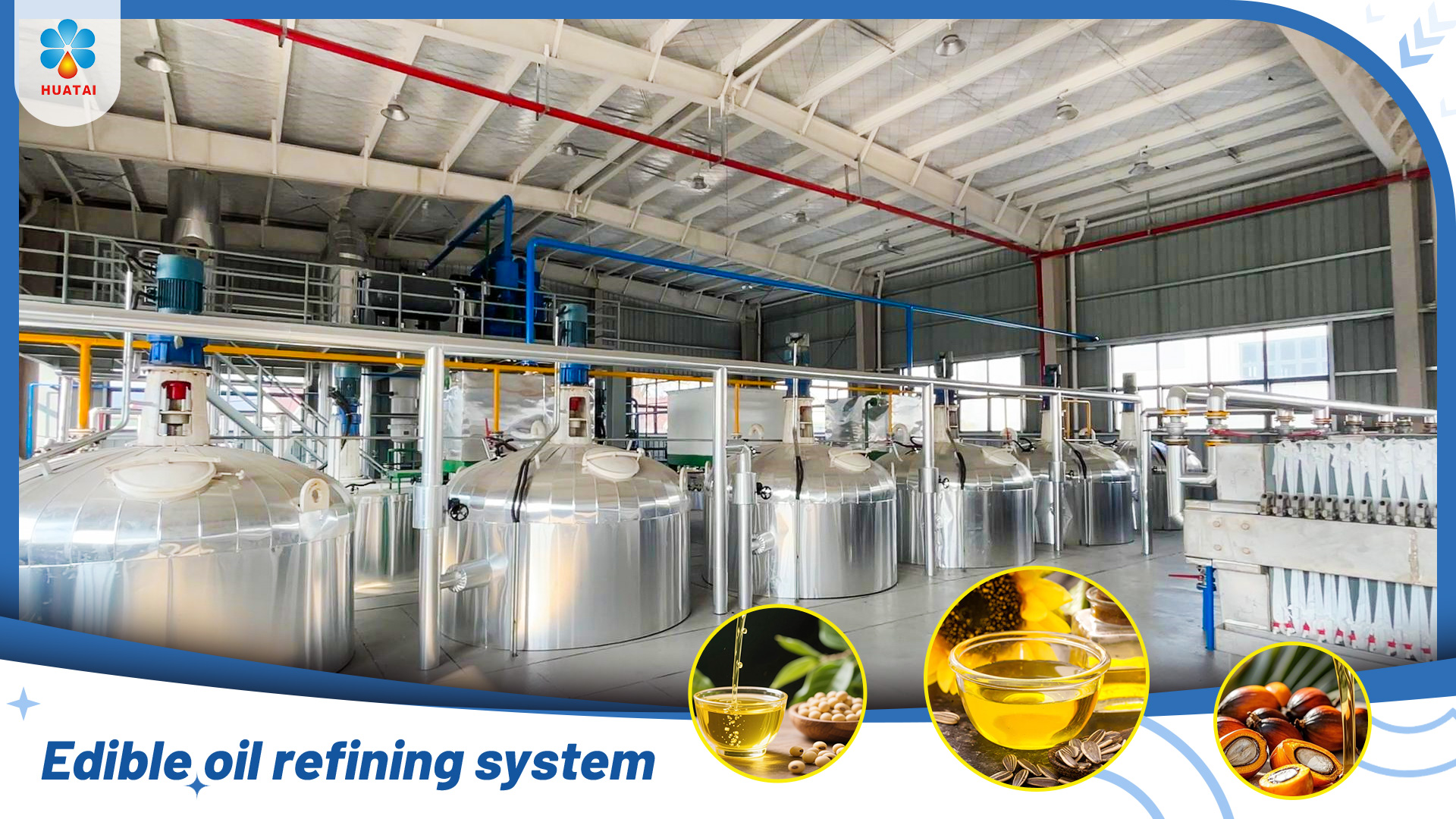
Get a Customized Oil Degumming Solution & Free Budget Analysis Today!
Are you planning to upgrade your existing refinery or build a new edible oil production plant? Contact Huatai’s engineering experts to get your tailored processing layout and competitive quote.
-
Email: info05@cnoilmachine.com
-
Phone/WhatsApp: +86 18337263319
-
Address: Xiangjiang Road, Industry Zone, Hua County, Henan Province, China
Technical Specifications
Engineered for efficiency, built for performance.
Working Principle
Degumming
Removes phospholipids and gums with water/acid treatment.
Deacidification
Neutralization or physical stripping lowers FFA.
Decolorization
Vacuum bleaching with clay removes pigments and traces.
Deodorization
Steam stripping under vacuum removes odor and FFA.
Dewaxing / winterization
(Optional) Crystallization & filtration for high-wax oils.
Why Choose This Equipment
High oil quality
Meets food-grade standards (low FFA, bright color).
Low loss
Optimized refining cuts neutral oil loss.
Flexible scale
From small batch to 1,000 TPD continuous.
Automated
PLC control of temperature, vacuum and dosing.
Hygienic
SS contact parts, CIP-friendly design.
Applicable Materials
Vegetable oils
Soybean, rapeseed, sunflower, peanut, cottonseed.
Specialty
Rice bran, palm, corn germ, sesame.
Frequently Asked Questions
Capacity range?
1–1,000 TPD, batch to continuous.
Refining loss?
Minimized via optimized neutralization and stripping.
Can it produce edible-grade oil?
Yes, output meets food standards.
More from Oil Refining Machinery
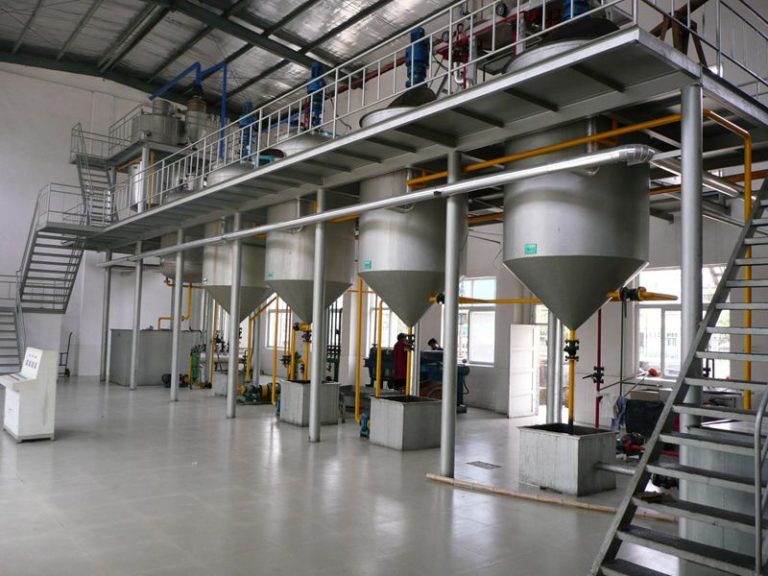
Edible Oil Refining Plant Equipment: Complete Turnkey Refinery Solutions
Edible Oil Refining Plant Equi…
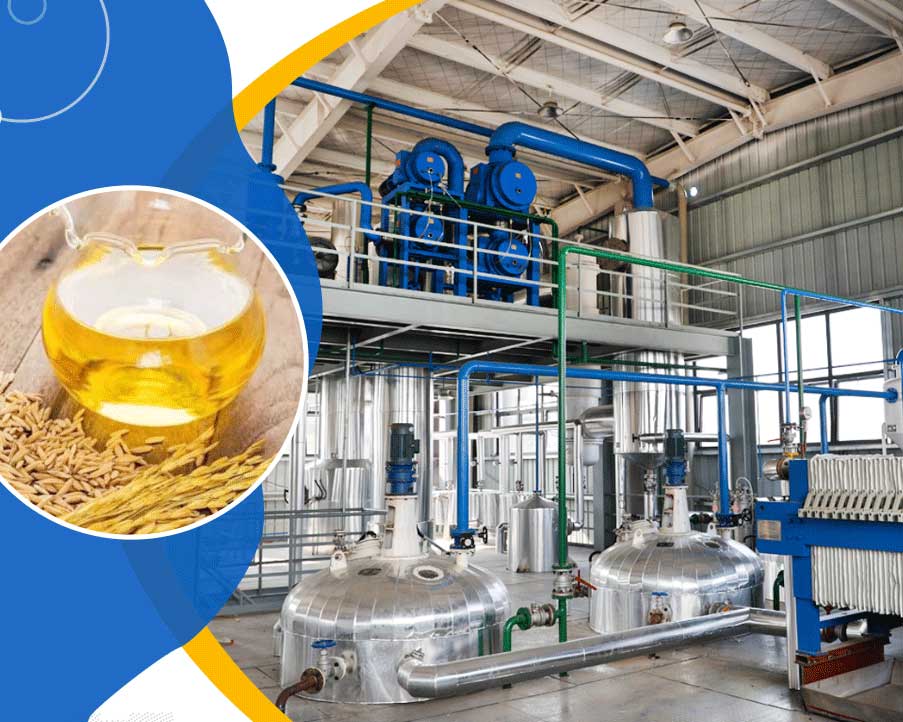
Rice Bran Oil Refining Equipment
First Grade Rice Bran Oil Refi…
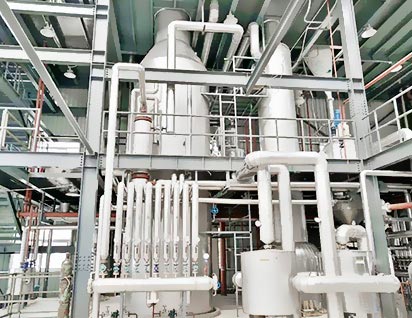
Deodorization tower
Deodorization towerDeodorizati…
Ready to Get a Tailored Solution?
Tell us your raw material, daily capacity and target specs — our engineers will design the optimal configuration for your plant.