
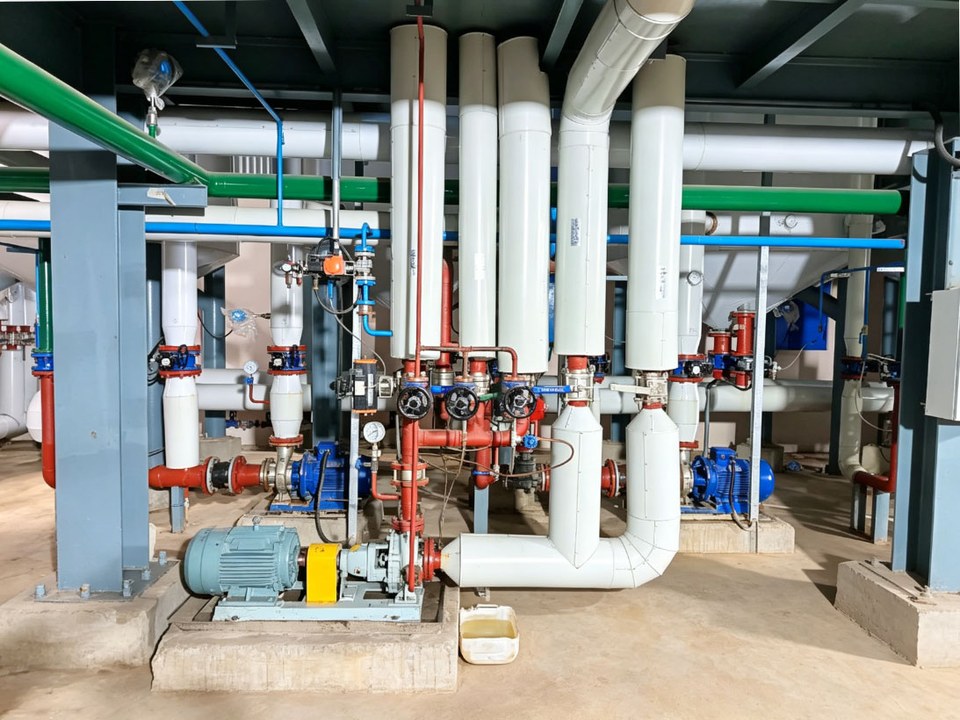
A sunflower oil production line works best when seed preparation, oil recovery, refining, and dewaxing are treated as one connected process. The raw material condition, daily throughput, target oil quality, and available utilities shape every stage. Coordinating these factors helps prevent bottlenecks, supports stable operation, and creates a practical foundation for producing clear, market-ready sunflower oil.
What a Complete Sunflower Oil Production Line Includes
From Seed Preparation to Crude Oil
Production begins with screening and impurity removal. Stones, metal, dust, and other foreign material should be removed before the seeds reach the size-reduction and conditioning stages, because poor cleaning can increase wear and complicate downstream oil clarification.
Depending on the project, preparation can include dehulling, crushing, rolling, and heating or conditioning. These operations expose more of the oil-bearing structure and prepare the material for pressing, while the actual sequence should be matched to seed quality and the intended extraction route.
Within an integrated project, the sunflower oil production line connects preparation with pre-pressing, cake extraction, refining, dewaxing, and filling under one process design.
From Crude Oil to Market-Ready Oil
Extraction and refining solve different problems. Pressing or solvent extraction separates crude oil from the prepared oilseed material, whereas refining removes gums, pigments, odor compounds, moisture, and other unwanted components from the crude oil.
A typical industrial route may use pre-pressing before solvent extraction of the remaining cake. The crude oil then moves through the selected refining stages, followed by dewaxing when clear sunflower oil at lower storage temperatures is a finished-product requirement.
How Capacity Changes the Process Configuration
Small-Scale Pressing Projects
Huatai Group describes small sunflower oil extraction systems in the 1–20-ton-per-day range. At this scale, a project may use cleaning, cooking or conditioning, mechanical pressing, filtration, and conveying, although dehulling and refining still depend on the raw material and the intended finished product.
The sunflower oil extraction machine configuration illustrates how cleaning, conditioning, pressing, filtration, and conveying can be combined for a compact processing line.
Industrial Pre-Pressing and Solvent Extraction
As far as larger-scale industrial projects are concerned, Huatai Group provides complete sunflower oil processing lines from 10 to 5,000 TPD, depending on customized engineering. Just because there is a wide range of capacities does not mean that each processing plant has identical machinery; everything should be balanced with respect to the chosen capacity.
Pre-pressing reduces the oil load before the remaining cake enters solvent extraction. A clear process flow should show the capacity basis of each section and the points where crude oil, meal, solvent, and vapors move through the system.
Why Dewaxing Matters in Sunflower Oil Refining
Cooling and Crystallization Control
Sunflower oil can retain a small amount of wax after deodorization. When the oil cools, that wax may form visible haze, so controlled cooling and crystal formation are important whenever a clear finished product is required.
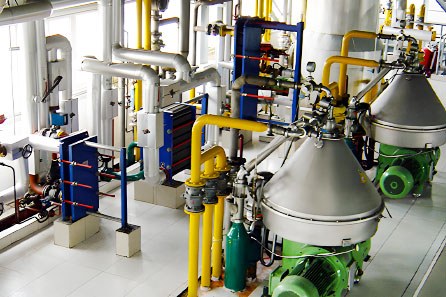
The equipment must cool the oil at a managed rate and provide sufficient crystallization conditions before separation. The final settings should be based on feed quality, plant capacity, and the target specification rather than copied from a generic time-and-temperature formula.
Filtration and Finished-Oil Requirements
After crystallization, filtration separates wax solids from the liquid oil. The filtration area, operating temperature, tank arrangement, and transfer sequence should be coordinated with the refinery so that dewaxing does not become the production bottleneck.
The intended market, required appearance at expected storage temperatures, packaging format, and applicable local oil standard all influence the finishing section. Defining these targets gives the engineering team a measurable basis for crystallization and filtration design.
How Process Inputs Shape Plant Design
Raw Material and Finished Product Targets
Plant design begins with the oilseed source, expected moisture and impurity condition, operating hours, daily input, and seasonal variation. The process also changes according to whether the intended output is crude oil or a refined, dewaxed, and packaged product.
Meal handling, hull use, oil storage, and other by-product plans also define the process boundary. When these streams are considered from the beginning, Huatai Group can connect the main production stages with a more coherent material-flow strategy.
Site Utilities and Layout Constraints
Plant layout depends on reliable information about electricity, steam, water, fuel, drainage, storage, and installation access. Local safety and environmental requirements should be incorporated before the layout is finalized, especially when solvent extraction is included.
Material flow deserves equal attention. Short, logical routes between seed receiving, processing, oil tanks, meal storage, and filling can reduce unnecessary handling, while adequate maintenance access supports routine inspection and future equipment replacement.
Why Integrated Engineering Matters
Process Matching Across Every Stage
Each process stage must have enough capacity to support the rest of the plant. Process design, equipment manufacturing, installation, commissioning, operator guidance, and operational support work most effectively when they follow the same engineering basis.
Huatai Group approaches sunflower oil processing as a complete solution. The essential measure is whether the selected sequence converts the specified raw material into the required oil and by-products while keeping the interfaces between preparation, extraction, refining, and storage clear.
Process Coordination Across the Plant
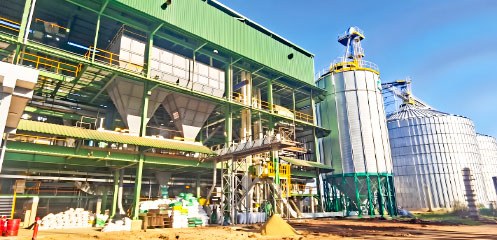
Stable production depends on consistent design assumptions for feed capacity, process flow, contact materials, automation, utilities, civil works, installation, operator training, spare parts, and performance checks. A weakness in one section can limit the output of the entire line.
Changes in seed condition, operating schedule, finished-oil target, or site utilities can alter equipment selection and process balance. Keeping the design basis current makes later optimization and capacity expansion more manageable.
Conclusion
A well-designed sunflower oil production line is an integrated engineering system, not a collection of independent machines. Aligning preparation, extraction, refining, dewaxing, storage, and site utilities supports consistent finished-oil quality, smoother plant operation, and future expansion.
Explore complete grain and oil engineering solutions from Huatai Group for integrated sunflower oil processing.
FAQ
Q: What equipment is required for a sunflower oil production line?
A: The required equipment depends on the project boundary. A complete line can include seed cleaning, dehulling, crushing, conditioning, pressing, cake extraction, crude-oil refining, dewaxing, storage, and filling. Small plants may use fewer stages, while industrial projects require balanced material handling, utilities, and process-control systems.
Q: When should a plant use pre-pressing and solvent extraction?
A: Pre-pressing followed by solvent extraction is generally considered for industrial plants seeking to recover additional oil from pressed cake. The route depends on throughput, seed preparation, meal objectives, solvent-handling infrastructure, local safety requirements, and operating economics. Its process flow should remain balanced with refining and by-product handling.
Q: Why is dewaxing needed in sunflower oil refining?
A: Small amounts of wax can remain in sunflower oil after deodorization and may create haze when the oil cools. Dewaxing uses controlled cooling, crystallization, and filtration to separate those wax solids. The required configuration depends on crude-oil characteristics, plant capacity, and the finished oil’s clarity specification.
Q: How do raw material and site conditions affect line design?
A: Oilseed moisture, impurity level, daily throughput, operating schedule, finished-product target, and packaging plan influence the process route. Electricity, steam, water, drainage, storage, and plant layout affect equipment arrangement and utilities. By-product handling and local safety requirements should also be incorporated into the engineering basis.