

One of the main mistakes while designing solvent extraction plants is the fact that people think the extractor should be designed and the other facilities should follow this extractor. Usually, the production capacity and cost depend on how the feed is prepared, permeability, desolventizing of the wet meal, evaporation, solvent recovery, etc. To make the process function properly, it should be balanced from the initial stage to the crude oil and meal.
Huatai Group designs whole systems for solvent extraction depending on the seeds that are used, feed preparation, capacity needs, the product specification, utilities and site needs. It includes such processes as pre-treatment, pre-pressing, solvent extraction, miscella evaporation and stripping, DTDC, condensation and solvent recovery.
Start With the Problems That Affect Daily Production
The plant seldom operates each day under the same conditions that were considered during the initial capacity calculation of the plant. Humidity levels fluctuate, fines accumulate, cake thickness is different, and the flow rate is changing. All of these factors influence the solvent distribution through the bed as well as miscella drainage. If the material preparation process is not consistent, an oversized extractor will experience channelling, poor drainage, elevated residual oil or fines in the miscella.
This is why extractor selection should begin with the upstream process. Huatai Group can provide oilseed preparation units – cleaning, crushing, flaking, conditioning, extrusion or pre-pressing depending on the chosen extraction process route. In case of high-oil seeds like rapeseed, sunflower or peanut, pre-pressing before extraction will help to decrease the burden on the solvent process. Direct extraction of soybean or rice bran could be a preferable option in case of correct material preparation.
Choose the Extractor by Feed Behavior, Capacity and Site Layout
Rotocel Extractor: Compact and Practical for Small to Medium Lines
The rotocel extractor uses a number of material cells which are fixed to a central shaft which is rotated by an electric motor. A range of models are available from Huatai Group for extraction rates of 100-500 t/d, such as the HTYJP100 to the HTYJP500. Due to the high fixed material layer within the extractor it allows for self-filtration, thereby preventing fines from passing into the miscella should the feed be correctly prepared. The simple design of the rotocel makes it suitable for a number of small to medium size continuous extraction plants, particularly where the feed to the extractor is in the form of flakes or pre-pressed cakes and easy maintenance is required.
This form of equipment is particularly suitable for projects with limited floor space where the material can form a stable bed. A project must be reviewed as a process problem if the feed contains too many fines or if it is impossible to maintain an even bed and the problem is to be solved by increasing the size of the extractor.
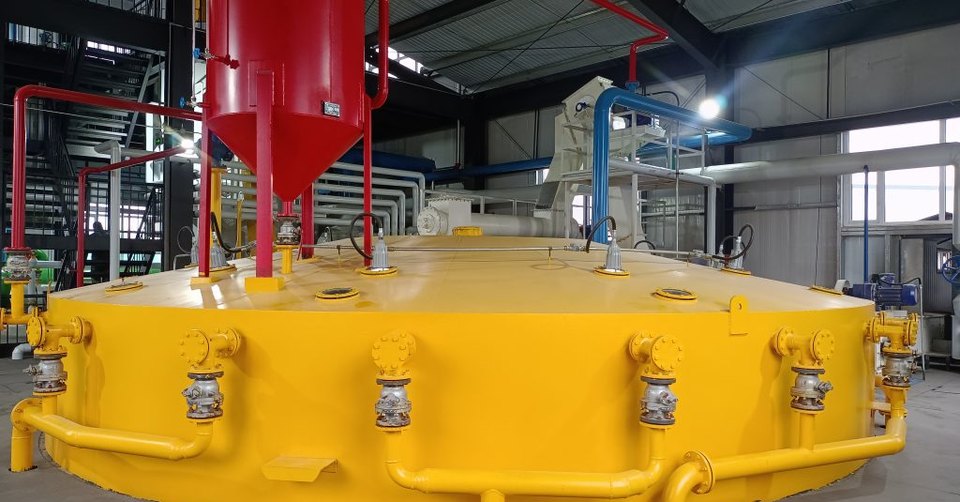
Loop Type Extractor: Shallow Bed and Strong Material Turnover
The loop type extractor moves material through upper and lower sections and turns the bed during circulation. Huatai Group configurations cover about 500–3,000 t/d. The shallow-layer arrangement supports solvent penetration and drainage and is often selected for medium and large plants that need continuous, uniform extraction.
Its sectional construction is also useful for transport and on-site assembly. During layout design, however, space for the chain system, bends, discharge area and maintenance access must be reserved from the beginning.
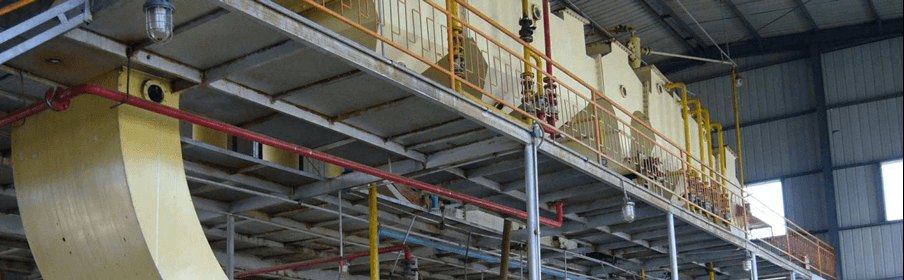
Drag Chain Extractor: Large Continuous Capacity
For large direct-extraction or pre-press extraction lines a drag chain extractor can be used to move material through a long closed bed of material in separate extraction zones. Huatai Group extraction line designs for drag chain extractors range from 500 t/d to 4,000 t/d. This type of extraction can handle high throughputs, and has an advantage when processing feeds with a high proportion of fines, but requires a lot of horizontal space and careful planning to allow access to the chain, drive and discharge sections.
For uncertain extractor types of projects, Huatai Group can compare three different options against the same material balance and draw the site to match the different options instead of forcing the plant to fit around a preferred extractor type.
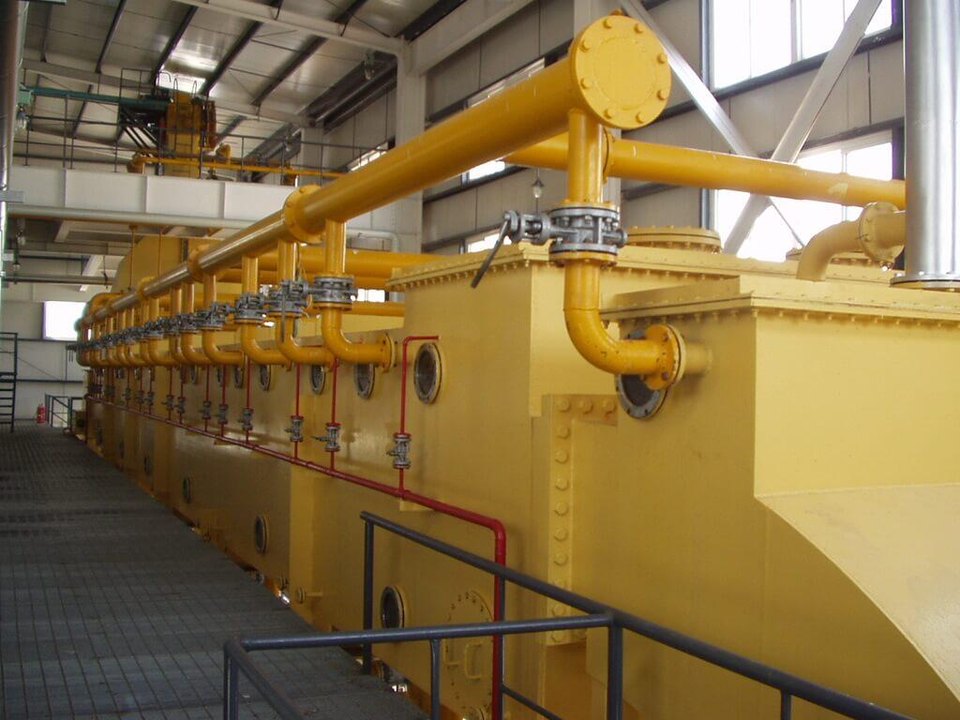
Do Not Let Downstream Equipment Become the Bottleneck
Extractor capacity only matters if the rest of the line can carry the same load. Wet meal leaves the extractor with solvent and has to be desolventized, toasted, dried and cooled. Huatai Group’s DTDC system is sized as part of the extraction balance, not as an unrelated add-on. If DTDC duty is too small, meal quality, solvent recovery and line stability all suffer.
The miscella side needs the same attention. Evaporation and stripping must match miscella flow and concentration, while condensers, mineral-oil recovery and vent-gas treatment return solvent to the circuit. Huatai Group’s edible oil extraction process integrates extraction, wet-meal treatment, miscella evaporation and solvent recovery in one closed process route. This is where steam use, solvent loss, residual oil and operating stability are won or lost.
What Huatai Group Customizes for a Real Project
A useful quotation should answer more than “what model do I need?” Huatai Group can develop a project-specific process based on raw material, capacity, oil content, prepared-feed form, desired residual oil, meal use, crude-oil quality, available steam and power, local climate, building dimensions and expansion plans.
The company provides turnkey oil production solutions from process design and equipment manufacturing to installation, commissioning and training. Huatai Group operates a 100,000 m² manufacturing base and supports projects through overseas offices. For oilseed-specific requirements, customers can also review complete lines such as the soybean oil solution, rapeseed/canola oil solution and sunflower oil solution. These pages show how extraction is connected with pretreatment, pre-pressing, refining and by-product handling rather than treated as a stand-alone machine purchase.
A Practical Selection Checklist
Raw material and preparation: Oilseed type, oil content, moisture, flake or cake condition, fines and permeability.
Actual production target: Daily capacity, operating hours, seasonal peaks and expected future expansion.
Product targets: Residual oil in meal, crude-oil quality and the intended use of meal.
Utilities and solvent balance: Steam, power, cooling water, solvent recovery and local environmental requirements.
Site restrictions: Building height, floor area, transport limits, maintenance access and safe shutdown space.
Project responsibility: Clarify who will handle process design, manufacturing, installation, commissioning, training and after-sales support.
If these points are clear, Huatai Group can recommend an extractor and the surrounding systems as one matched line. That usually gives a more useful decision than comparing capacity numbers alone. To discuss a project, use Huatai Group’s custom solution and provide the raw material, target t/d, current preparation method, site dimensions and required final products.
FAQ
Q: Which extractor should I use?
A: Rotocel can be used for compact small and medium lines, loop type is good for shallow bed medium and large plants and drag chain is sometimes used for large capacity continuous. The final choice depends on the feed permeability, fines, plant layout and downstream balance.
Q: Does Huatai Group have anything else besides the extractor?
A: Yes, Huatai Group could provide the entire extraction line comprising pretreatment or pre-pressing, extractor, DTDC, evaporation and stripping, condensation, solvent recovery and automation.
Q: What data is required to make the quotation?
A: Please give the seed type, capacity, oil content or feed preparation condition, running time, product specifications, utility provision and plant space for sizing the line with real working conditions.